
HSC 2026 Countdown: The Ultimate Study Plan After Trial Exams
Trials are done. The roughly eight weeks between now and your child's first written exam are what make the difference between results they’re proud of and the feeling they could have achieved more. Now is the time for a good HSC study plan.
The encouraging part of the HSC countdown 2026 is that your child has more time than it feels like, and the research on how to spend it is refreshingly detailed. Trials are the sharpest diagnostic tool your child gets before the real exams, and a smart post-trial HSC study plan turns those results into better marks in October.
Top Study Tips
The 2026 HSC written exams run from Tuesday 13 October to Thursday 5 November, opening with English Paper 1.
The highest-value study is active recall and timed past papers, not re-reading notes.
Sleep belongs inside the study plan, not as a reward for finishing it.
Build the plan backwards from each exam date, then guard it.
Your HSC Countdown 2026: The Dates That Matter
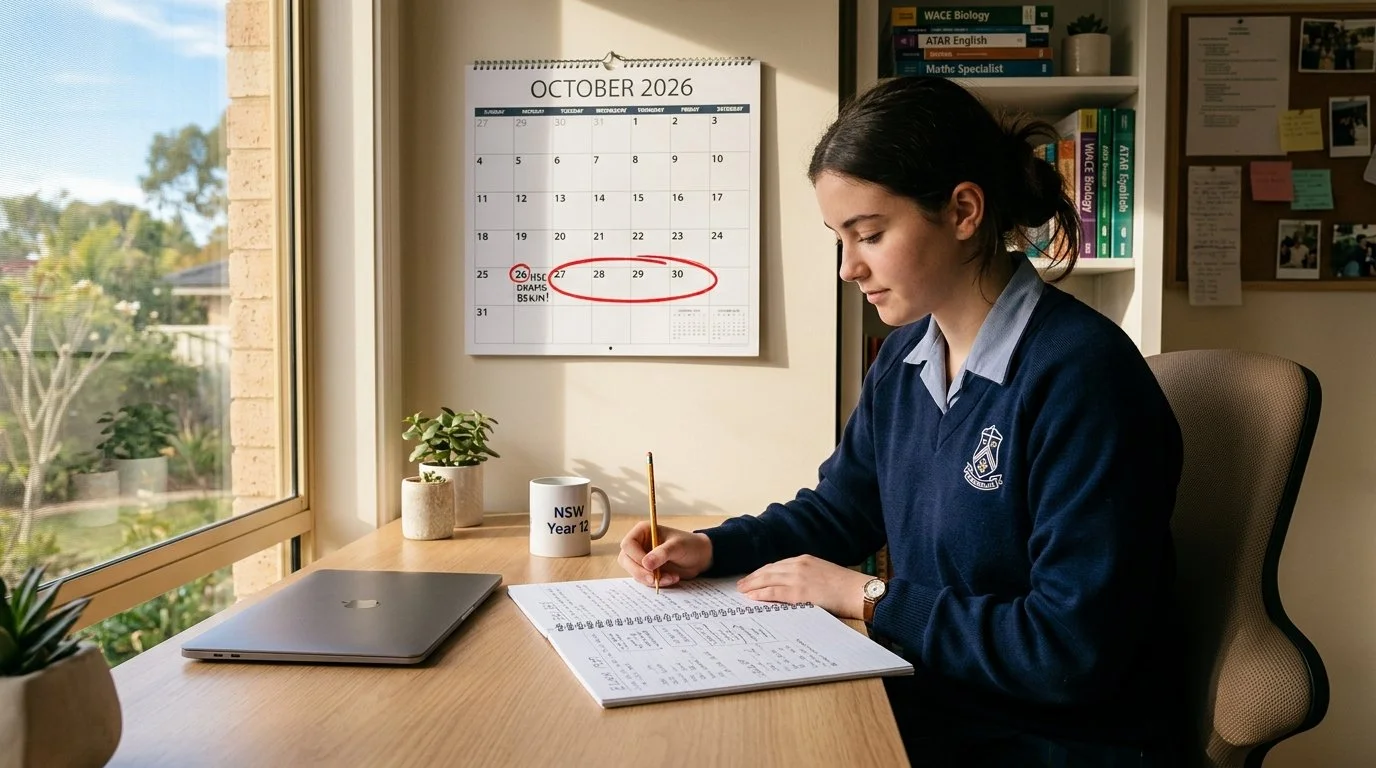
You can't plan around a deadline you haven't pinned down. This year, NESA has confirmed that the written exams run across an 18-day window from Tuesday, 13 October to Thursday, 5 November 2026, with around 80,000 NSW students sitting at least one paper.
English Paper 1 goes first on 13 October, and the timetable finishes with Physics on the morning of 5 November. Results will be announced on Wednesday, 16 December.
The number that shapes your child's HSC study plan most isn't the start of the exam block, though. It's their personalised timetable. A child sitting English, Maths and Chemistry in the first week has a very different countdown to one whose subjects cluster at the end.
Print the timetable, stick it on the fridge, and count backwards from each exam.
Read the Trial Results Before You Plan Anything
The temptation after trials is to fix everything at once. But trials are worth far more as a map than as a scoreboard.
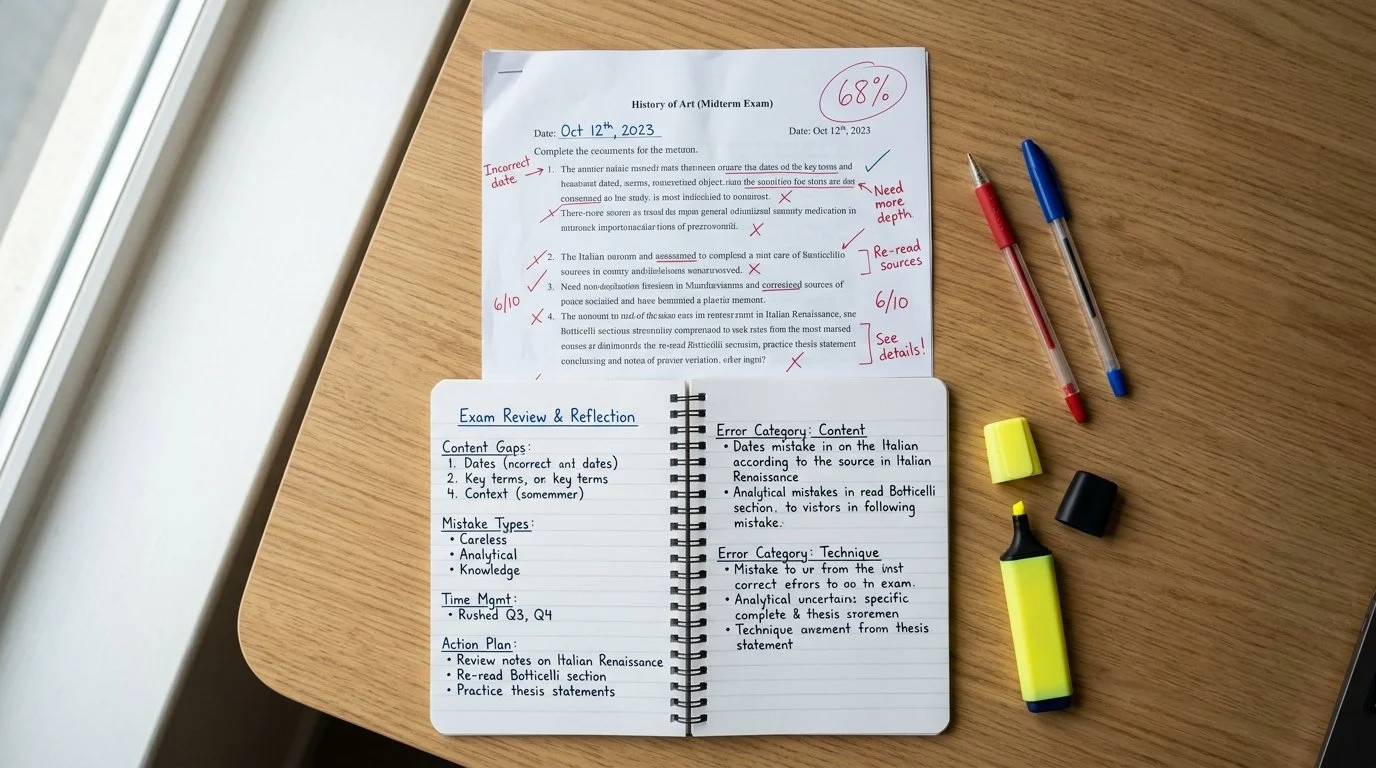
Sit down with your child and sort the lost marks into three piles. Were they caused by content gaps? Poorly managed time? Or maybe exam technique? Each pile has a different fix, and treating a timing problem like a content problem wastes the weeks your child can least afford to waste.
This is also where an honest outside opinion helps. Students consistently overrate topics they feel familiar with and underrate the ones they find uncomfortable. A teacher or a tutor can spot the two or three topics that will move an ATAR the most.
What a Strong Post-Trial HSC Study Plan Looks Like
Most study plans are built around re-reading. Your child highlights their notes, feels productive, and remembers almost none of it a fortnight later.
Decades of learning research favour retrieval practice over passive review, which means closing the book and forcing your brain to retrieve the answer. A meta-analysis in Educational Psychology Review found that spacing retrieval over time yielded a strong benefit compared with cramming it into a single session. An hour of testing yourself across three days beats three hours of reading the night before.
So a post-trial HSC study plan should be built from two things, repeated on a loop:
Active recall. Blank-page brain dumps, flashcards, past questions answered from memory, teaching a concept aloud to a parent who has no idea what a redox reaction is. Anything that makes the brain do the retrieving.
Timed past papers. NESA publishes years of past HSC papers and marking guidelines for free. Working through them under real exam conditions trains content, timing, and technique at once, and the marking guide then shows exactly where the marks sit.
Building Your HSC Study Plan Week by Week
An eight-week countdown works best in phases. Adjust the timing to your child's actual timetable, but the shape holds.
Weeks 8 to 6: Close the Gaps
Start with the content piles from the trial analysis. Prioritise the weakest topics in the subjects worth the most ATAR, and rebuild them properly with study notes and worked examples before moving to practice. Blend in short recall sessions daily so nothing already learned goes cold. Two to three focused hours a day beats a heroic weekend that ends in burnout.
Weeks 5 to 3: Shift to Past Papers
By now, the aim is application, not first-time learning. Move to full past papers, first by section, then whole papers under timed conditions. For math and the sciences especially, this is where speed and accuracy come together. Mark every paper against the guidelines and log recurring mistakes, because patterns in errors are where the easy marks are hiding.
Weeks 2 to 1: Sharpen and Simulate
Sit papers in the same time slot as the real exam, in one sitting, no phone. Refine essay structures and memorised quotes for English, tighten recall of formulas for the sciences, and rehearse the first 10 minutes of reading time.
Final Days: Taper, Don't Cram
Light retrieval, a scan of summary sheets, and early nights. The learning is banked by now. The job is to arrive fresh.
The Forgotten Study Habit: Sleep
Every parent of a Year 12 student eventually meets the 2am study session. It feels dedicated, but it’s usually counterproductive.
Sleep is when the brain consolidates the day's learning, which is why research links better, more consistent sleep to stronger academic performance. An all-nighter before an exam sends your child in impaired. The hours studied never make up for the loss of retention and clear thinking.
A steady sleep routine throughout the whole countdown is one of the best tools for boosting marks, and it costs nothing.
The Mistakes That Cost Marks in the Final Weeks
Re-reading and calling it revision. It feels safe and does little. Trade it for recall.
Studying strong subjects because they're comfortable. The marks move fastest in the weak spots.
Skipping the marking guidelines. Answering past papers without marking them honestly hides the exact gaps you're trying to find.
One giant weekend session. Spacing beats bingeing, every time.
Leaving English until last. With Paper 1 opening the exam block on 13 October, early HSC English tutoring and essay practice pay off well before the sciences are even sat.
Eight Weeks Is Plenty If You Start Now
The gap between a trial mark and a final mark is often just a matter of how your study plan is structured and followed. A clear HSC study plan, built on active recall and timed papers, protected by real sleep and honest feedback, turns the HSC countdown 2026 from something to dread into something your child can control.
Every child manages this differently, and some need more than a plan on paper to stick to it. If your family wants expert eyes on the schedule and the marked papers, HSC tutoring can help.
Little Geniuses’ online tutors work through past HSC and trial papers with your child, mark essays with detailed written feedback, and build a personalised study plan around their real weak spots, not a generic template. Whether your child needs dedicated support in English, Maths or Chemistry, or overall guidance through the HSC, we can help them prepare confidently and efficiently.
Find the Right Tutor for Your Child
Our tutors specialise in primary and secondary school support across Australia. From weekly sessions to intensive exam prep, we build a plan around your child's goals.
Get Started Today