
The HSC allows students to specialise and is assessed primarily through external exams. The IB requires breadth across six subjects, plus an Extended Essay, Theory of Knowledge (TOK) and Creativity, Activity, Service (CAS). Australian universities accept both.
The HSC is the NSW state credential. Students choose most of their subjects, specialise, and sit external exams at the end of Year 12. The International Baccalaureate (IB) Diploma is an international program. Students study six subjects across different disciplines, complete three core components, and are assessed through coursework and exams. Both lead to university, and the choice is usually made before Year 11 begins.
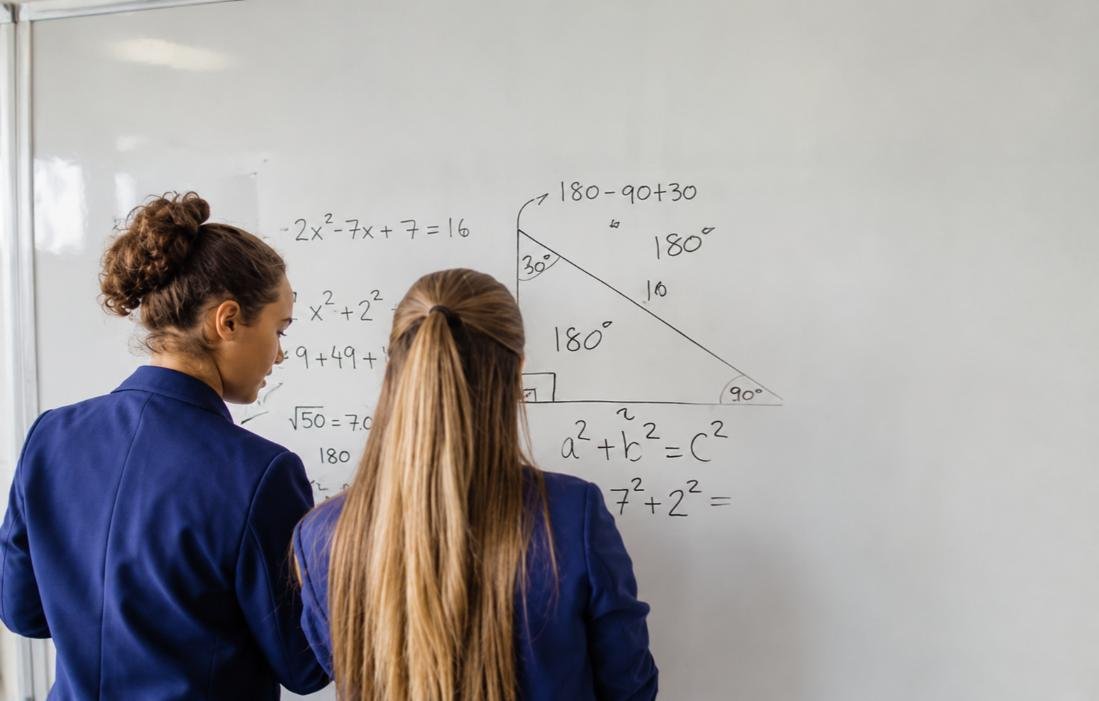
How the HSC Works
The HSC is administered by the NSW Education Standards Authority (NESA). To earn it, students complete a Preliminary pattern of study of at least 12 units, then an HSC pattern of at least 10 units. Year 11 is the Preliminary year, and HSC courses formally start in Term 4 of Year 11.
Most courses are worth two units, and both patterns must include two units of Board Developed English. The rest is the student's choice, from Mathematics Extension 2 to Visual Arts.
Preliminary results don't feed into the ATAR. The ATAR is based on scaled marks in 10 units of HSC courses: the best two units of English plus the best eight from the rest. Year 11 still matters because it builds the skills Year 12 relies on. The HSC is available at schools across NSW.
How the IB Diploma Works
The IB Diploma is run by the International Baccalaureate Organization (IBO) across Years 11 and 12. Students take at least one course from each of five groups: language and literature, language acquisition, individuals and societies, sciences, and mathematics. A sixth subject often comes from the arts. Typically, three subjects are studied at Higher Level (HL) and three at Standard Level (SL).
Alongside the six subjects sits the core. That's the Extended Essay (EE), an independent research paper, plus TOK and CAS. Each subject is graded from 1 to 7, and the EE and TOK can add up to three bonus points. The maximum is 45, and students need at least 24 to be awarded the Diploma. Coursework (internal assessment) counts towards subject grades alongside external exams, with the weighting varying by subject.
Unlike the HSC, both years of the IB count towards the final result. Results are reported as an IB Admissions Score (IBAS), which UAC converts into a Combined Rank comparable to the ATAR. For offers from August 2026, an IBAS of 40.00 converts to 96.35. The method can change each year, and entry to courses isn't guaranteed.
Availability is more limited than the HSC. There are only 100 schools across Australasia offering the Diploma as of 2026. NSW had Australia's largest Diploma cohort in November 2024, with 827 students.
IB vs HSC: What's the Difference in Year 11?
The difference between the IB and HSC for Year 11 students is evident in structure, assessment, and workload.
| Feature | HSC | IB Diploma |
|---|---|---|
| Run by | NESA (NSW) | IBO (international) |
| Subjects | At least 12 units in Year 11; students choose, with English compulsory | Six subjects across subject groups, usually 3 HL and 3 SL |
| Year 11 results | Don't count towards the ATAR | Both years count towards the final score |
| Assessment | School-based tasks and external exams | Coursework and external exams |
| Research component | None compulsory | Extended Essay required |
| Critical thinking | Built into individual subjects | TOK required |
| Extra-curricular | Not a requirement | CAS required |
| Final score | ATAR | Out of 45, converted to an ATAR-equivalent |
| Workload shape | Depth in chosen subjects | Breadth across six subjects plus the core |
| University recognition | Accepted nationally | Accepted via UAC conversion; recognised by many overseas universities |
| Availability | Schools across NSW | Select schools only |
Neither is objectively harder or better. They reward different learning styles.
How Do Results and Timing Compare?
The difference between the IB and HSC for Year 11 students in Australia also shows up in how and when results arrive.
HSC students sit external exams late in Year 12, and the ATAR ranks them against their whole age group. IB students sit external exams in November.
There's no hiding in the early months of the IB. Coursework and Year 11 exams count towards the final score from the start. In the HSC, Year 11 is a runway, but a short one, because HSC courses begin in Term 4.
Do Australian Universities Accept Both?
Yes. UAC's participating institutions accept the IB Diploma as equivalent to an Australian Year 12 qualification, though entry to specific courses isn't guaranteed. Selection is competitive, and some courses add their own requirements, such as interviews or portfolios.
The HSC leads to an ATAR, which every Australian university understands. The IB leads to an IBAS, which is converted into a Combined Rank comparable to the ATAR. If your child might study overseas, the IB's international recognition is worth raising with the school early.
What Should You Ask the School?
Before your child commits, a few questions are worth putting to the school:
Which pathways does the school offer, and can students move between them after the first Year 11 exams?
How are Year 11 workloads structured, especially for IB students juggling the Extended Essay and CAS?
Which subjects are available at HL and SL, or at the extension level in the HSC?
How does the school support students who want to study overseas?
Which One Suits Your Child?
The HSC may suit a child who:
wants to specialise in a few strong subjects
prefers exam-based assessment
would rather not take on an Extended Essay or CAS
The IB may suit a child who:
is curious across several disciplines
enjoys research and independent projects
is considering university overseas
There's no universally better option. Talk to your child's school, because not every school offers both, and some review progress after the first set of Year 11 exams. Whichever pathway your child takes, the right support can make Year 11 feel far more manageable.
With the right support, students can excel in both the HSC and IB. Little Geniuses offers personalised 1-on-1 online HSC tutoring and support from an IB English tutor, plus private tutoring across other subjects. Book a free consultation.
